Business visibility
SEO Is No Longer the Whole Job
Search rankings still matter, but they are only one part of how customers discover, judge and choose a business.

For years, the brief was simple. Find an SEO company, improve the rankings and wait for more enquiries to arrive.
That approach made sense when Google search results were the main route between a customer and a business. Marketing could be separated into tidy parts. One company built the website, another worked on search rankings, someone inside the business posted on social media, signs were ordered when needed and everything else was dealt with as it came up.
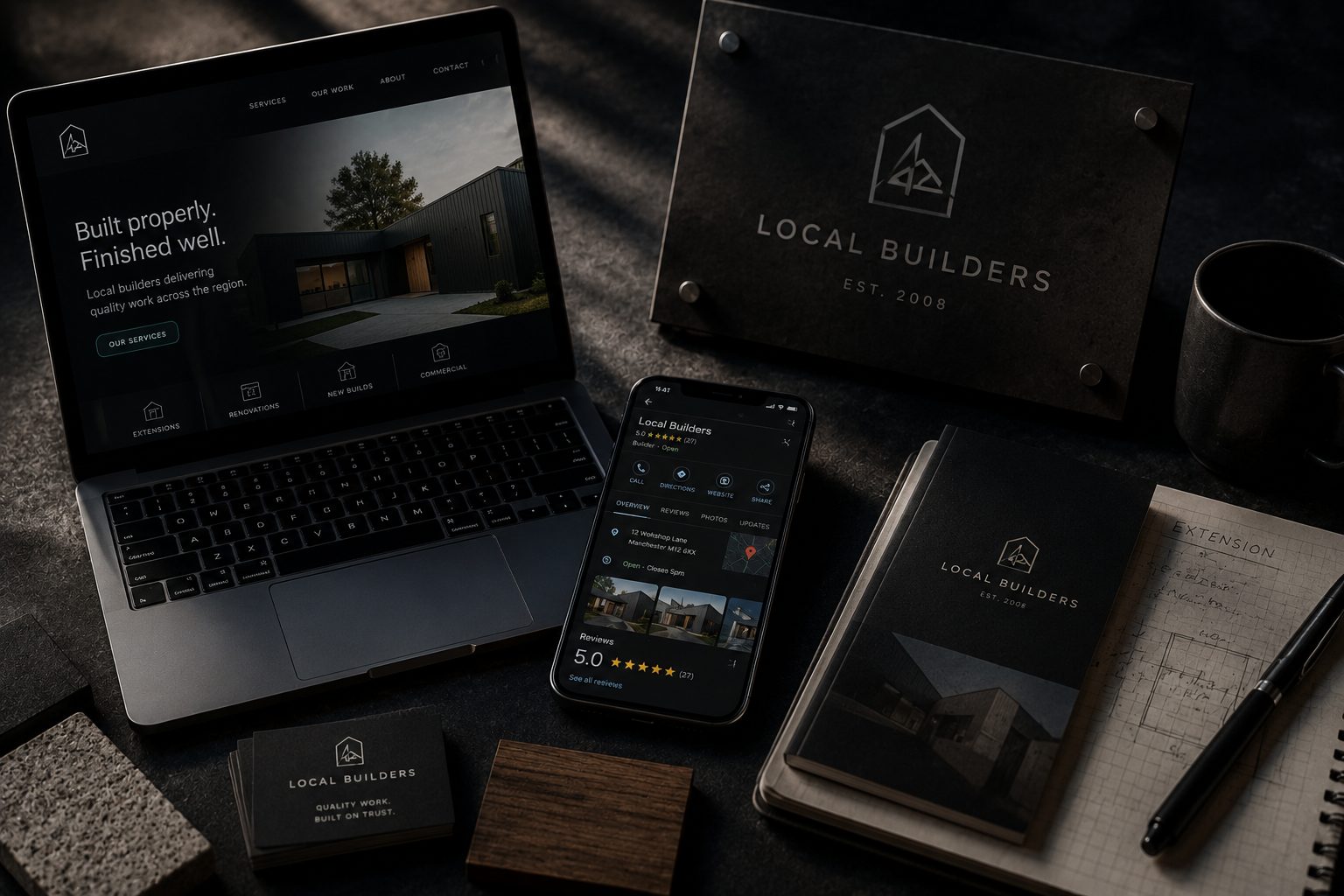
Customers do not experience a business in those separate parts. They might first notice a van, pass a sign or hear the company name from somebody they trust. Later, they search for the business, look at its reviews, visit the website, check recent work and compare it with two or three alternatives. They may return several times before making contact, and by then the decision has already been shaped by a collection of small impressions. The search result is only one of them.
SEO still matters, but the job around it has become much bigger. Ranking well can place a business in front of someone, but it cannot make the business look credible once they arrive. It cannot repair a confusing website, an outdated Google profile, weak service descriptions, poor photographs, inconsistent branding or a trail of unanswered reviews. A business can appear near the top of a search result and still lose the enquiry within seconds.
That is not always an SEO problem. Sometimes it is a trust problem. Sometimes it is a clarity problem. Often it is simply the result of nobody looking at the whole picture.
Customers see one business
Businesses tend to divide marketing into departments, suppliers and individual jobs. The website belongs to one company. SEO belongs to another. Social media is given to whoever has time. Signs and print are treated as separate purchases. Reviews are collected occasionally, usually when somebody remembers.
The customer sees none of that internal arrangement. They see one business and make one judgement. They do not know that the van graphics were produced six years before the website, or that the Google profile is handled by an agency while the social accounts are managed by a member of staff. They simply notice whether everything feels current, connected and believable.
Every visible part of the business contributes to the same set of questions. Does this company look established? Do they appear organised? Can I understand what they do? Do other people trust them? Are they likely to respond? Will they do the job properly? Most of those questions are answered before a conversation begins.
This is why visibility now needs to be understood more broadly. It is not simply a question of appearing in more places. A business can be highly visible and still be easy to ignore. Useful visibility helps the right people notice the business, understand it quickly and feel confident about taking the next step.
The quickest gains are often elsewhere
The marketing industry naturally leans towards campaigns, platforms and ongoing services. Sometimes those things are necessary. Sometimes the most useful improvement is much less impressive.
A business may gain more from correcting its Google profile than from publishing another month of social content. It may need clearer service pages rather than more visitors. It may need to ask its existing customers for reviews, replace poor photographs, improve the sign at the entrance or make the quotation process easier to understand.
These changes are not glamorous, but they remove friction. They help people find the right information, understand the offer and feel more comfortable making contact.
This is where a wider view becomes valuable. Instead of beginning with a channel, begin with the business. Look at how people first encounter it, what they see next and where confidence is being lost. The answer may involve SEO, but it may also involve design, content, signs, reviews, local listings, printed materials, website structure or several small improvements working together. A search report cannot always reveal those weaknesses because they sit outside the search results. A ranking may be improving while the customer journey remains poor.
Search itself is changing
Search is also becoming less predictable. Google results now include maps, adverts, videos, images, business profiles, shopping results and direct answers. AI tools are beginning to shape how people research services and ask for recommendations, sometimes without sending them through a traditional list of websites at all.
Businesses have less control over the route a customer takes. They cannot assume that every search will lead to the homepage, nor can they rely on a single ranking position to produce a steady flow of work. Platforms change their layouts, rules and priorities constantly, often without warning.
What a business can control is the quality of the information and experience surrounding it. It can make its services easier to understand, publish useful proof, maintain accurate listings, collect genuine reviews and present a recognisable, credible appearance wherever people encounter it. It can improve the way enquiries are handled and make the next step obvious. That work remains valuable even when a platform changes.
This is perhaps the most important shift. Businesses have spent years trying to control their position inside systems they do not own. The safer long term approach is to strengthen the things that remain theirs: their reputation, their clarity, their evidence, their customer experience and the way the business presents itself across every touchpoint.

The job is becoming one of direction
The traditional marketing arrangement can feel incomplete because each supplier is usually responsible for its own area. The SEO company looks at search. The web company looks at the website. The sign company looks at the signs. The social media company looks at content. All of them may be doing competent work, but nobody is necessarily deciding what matters most.
A business does not always need another specialist working on another channel. Sometimes it needs someone to step back, understand the company and identify where attention will have the greatest effect. That does not mean rebuilding everything. Not every company needs a new brand, a new website, a new campaign and a twelve month content plan.
In many cases, the more useful question is much simpler: what is currently stopping this business from being found, understood or trusted?
That question can lead to very different answers. A company might rank well but look dated. It might have a strong website and inaccurate local listings. Its signs might be excellent while its online presence feels abandoned. It may have hundreds of satisfied customers and almost no reviews. People might be visiting the website but leaving because they cannot work out which service they need. All of these are visibility problems, even when they do not fit neatly inside an SEO report.
A more rounded approach
The future of marketing may be less about selling businesses another individual service and more about helping them make better decisions. That requires a broader understanding of how search, design, websites, reviews, signs, content and customer experience affect one another. It also requires restraint. The answer should not always be more activity, more platforms or more spending.
Sometimes the right decision is to invest in search. Sometimes it is to leave search alone and improve everything people see after they arrive. Sometimes the quickest improvement is physical rather than digital. Sometimes the business needs clearer language, stronger proof or a more consistent appearance. The value lies in knowing the difference.
This does not make SEO unimportant. It places it in the correct context. Search can help a business become discoverable, but discovery is only the beginning. The business must still look credible, make sense and give people enough confidence to act.
For that reason, “help our rankings” is no longer a large enough brief. A more useful instruction would be: help us understand how people find us, what they see and why they choose us or leave.
That opens the door to a more honest assessment of the business. It allows search to remain part of the answer without assuming it is always the answer. The game has changed, but businesses do not need to chase every new trend. They need a clearer view of how they are seen and better control over the things they can genuinely influence. Rankings still matter. They are simply no longer the whole job.