Vehicle graphics
The History of Van Signs in London
Commercial vehicles have carried business names through London for generations. The techniques have changed from hand painted signwriting to cut vinyl and digitally printed graphics, but the basic job has stayed remarkably consistent: make the vehicle recognisable while it works.
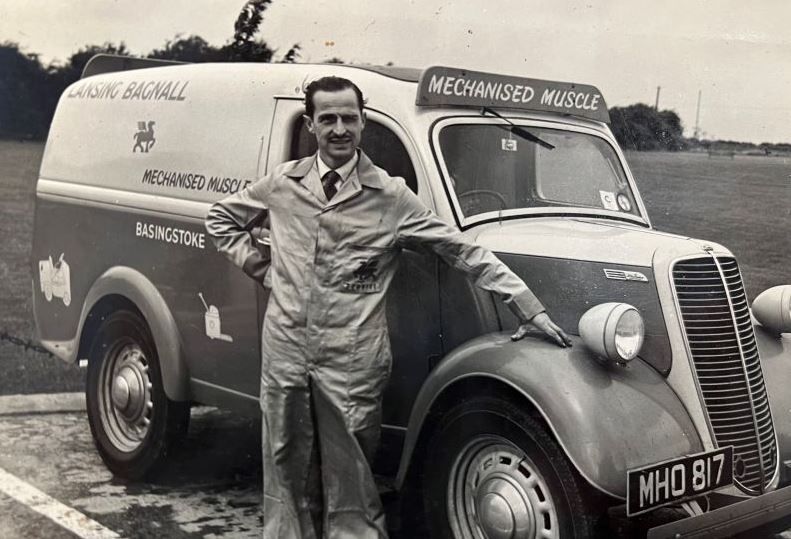
A working van has always been an unusually practical advertising space. It already has to travel to customers, sit outside jobs and move through the same streets as the people a local business wants to reach. Adding a name and a clear description of the business turns an operational vehicle into a repeated point of recognition.
The visual language has changed with the tools available. Traditional commercial vehicles relied on painted signwriting and hand produced lettering. Later, pressure sensitive films and computer cut vinyl made clean repeatable lettering easier to reproduce across fleets. Digital printing expanded the range again by allowing photographs, gradients and complex colour artwork to be produced as vehicle graphics.
Hand signwriting made every vehicle individual
Traditional signwriting was a craft built around layout, brush control and an understanding of how lettering behaved on a vehicle body. A skilled signwriter had to account for doors, handles, panel breaks and viewing distance while working directly on the vehicle. Even simple business lettering carried small variations because it was made by hand.
That process encouraged a useful discipline that still matters: the vehicle has a shape before the graphic arrives. Good signwriting works with the panel rather than treating the side of a van as a flat sheet of paper.
Cut vinyl made consistency much easier
Computer cut vinyl changed the production process because lettering and logos could be prepared digitally, cut accurately and repeated. A business with several vehicles could reproduce the same identity more consistently, while revisions and replacement graphics became easier to manage.
The design challenge did not disappear. A perfectly cut line of text can still fail if it is too small, too low contrast or buried among unnecessary information. The technology improved repeatability, not judgement.
Digital print widened what could be put on a van
Large format digital printing made full colour imagery and more complex graphics practical. That can be useful when the image itself explains the service, but more visual information is not automatically better. A van is often seen moving or from a distance, so the business name and core message still need to survive a very short viewing time.
Modern Van signs in London can combine cut lettering, printed graphics and partial coverage depending on the vehicle and the job. Premium Signs handles the physical vehicle graphics work, while the wider branding principle is the same: make the vehicle recognisable before trying to make it complicated.
London makes vehicle recognition particularly valuable
In a dense city, the same van may be seen on residential streets, outside commercial premises, in traffic and parked near a job. Those repeated encounters can build familiarity without the viewer consciously treating each one as an advert. A consistent vehicle therefore becomes part of the wider identity of the business.
- Keep the business name readable before secondary information.
- Use enough contrast to work in changing light and weather.
- Design around doors, recesses, handles and body lines.
- Avoid relying on tiny lists of services that only work when the vehicle is parked and viewed closely.
- Keep the identity consistent with the website, signs, workwear and other customer touchpoints where relevant.
The technology changed, the purpose did not
Paint, cut vinyl and digital print are different production methods, but all of them succeed or fail on the same basic question: can somebody understand and remember the business when they see the vehicle in the real world?
That is why the strongest van graphics often feel simpler than the technology behind them. The production method should support recognition, not become the reason for adding more information than the vehicle can comfortably carry.