Industrial identification
The Essential Role of Metal Tags and Labels in Industry
Industrial identification has to remain useful long after the artwork is approved. Material, legibility, fixing and operating environment all influence whether a label can still do its job years later.
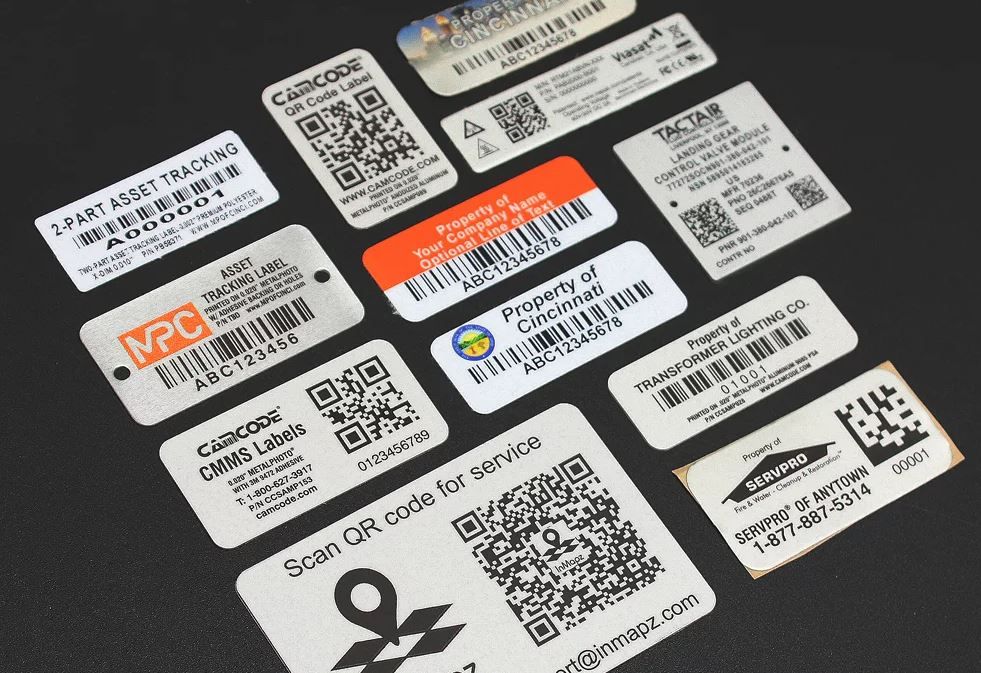
A small industrial label can carry information that is disproportionately important. A serial number may connect equipment to its service history. A rating plate may identify operating limits. An asset tag may keep a physical item connected to a digital record. A warning or instruction plate may need to remain readable for the life of the machine.
That is why durable metal tags and labels should be specified as part of the equipment rather than treated as a decorative item added at the end.
Begin with the information that must survive
The first design decision is not the metal. It is the information. Decide which details are permanent, which may change, who needs to read them and whether the data is controlled by a drawing, asset system, maintenance record or regulatory requirement.
Metal labels are often used because a paper or plastic label would not suit the service environment, but durability is only useful when the information itself is correct and clearly structured.
Equipment identification is a system, not a collection of plates
Part numbers, serial numbers, electrical ratings, service references, warnings and machine readable codes may all appear on the same piece of equipment. They should be organised so the user can find the critical information quickly rather than forcing every item to compete at the same visual level.
- Give critical identification and safety information clear hierarchy.
- Protect minimum text size and contrast in the real viewing conditions.
- Allow space around holes, edges and mechanical fixings.
- Test the longest serial numbers and variable data, not only a short sample.
- Keep barcodes, QR codes and data matrix marks clear enough for reliable scanning.
The operating environment should choose the material
Metal tags can be exposed to weather, cleaning chemicals, fuels, oils, heat, abrasion, salt, handling or repeated washing depending on the application. Those conditions should be stated before the material and image process are chosen.
There is no useful prize for specifying the toughest possible construction when the environment does not need it. Equally, an under specified label can become unreadable while the equipment around it is still serviceable. The right choice is the one matched to the real conditions.
Metalphoto is a specific anodised aluminium process
Premium Signs manufactures Metalphoto photosensitive anodised aluminium labels and nameplates. The photographic image is held within the anodic layer rather than printed conventionally on top of the metal. That construction is useful where permanent identification has to remain legible through demanding exposure.
Metalphoto should not be described as stainless steel. Stainless steel, brass and other metals can be appropriate for different plaques or signage applications, but they are different products and manufacturing routes.
Fixing is part of durability
A durable face cannot do its job if the label detaches. Adhesive backing, rivets, screws and other mechanical fixings each suit different substrates and environments. Temperature, contamination, vibration, surface condition and access for maintenance can all affect the choice.
The design of a printed metal tag should therefore allow for the attachment method from the beginning. Hole positions, edge distances and adhesive areas are functional parts of the specification, not details to add after the artwork is finished.
What to define before manufacture
- Final size, shape and quantity.
- The controlled wording, artwork or drawing.
- Material and thickness where specified.
- The operating environment and expected exposures.
- Adhesive, holes or other fixing requirements.
- Serialisation, barcodes or other variable data.
- Any applicable specification, revision, inspection or certification requirement.
Industrial identification works best when it is treated as part of the product information system. The label may be small, but the decision behind it should connect the data, environment, material, image process and fixing method into one clear specification.