Place branding
Blenheim Palace Design: How Heritage Becomes a Living Brand
Blenheim Palace has survived because its identity is carried by more than architecture. Landscape, history, events, print and visitor experience all reinforce the same sense of place.
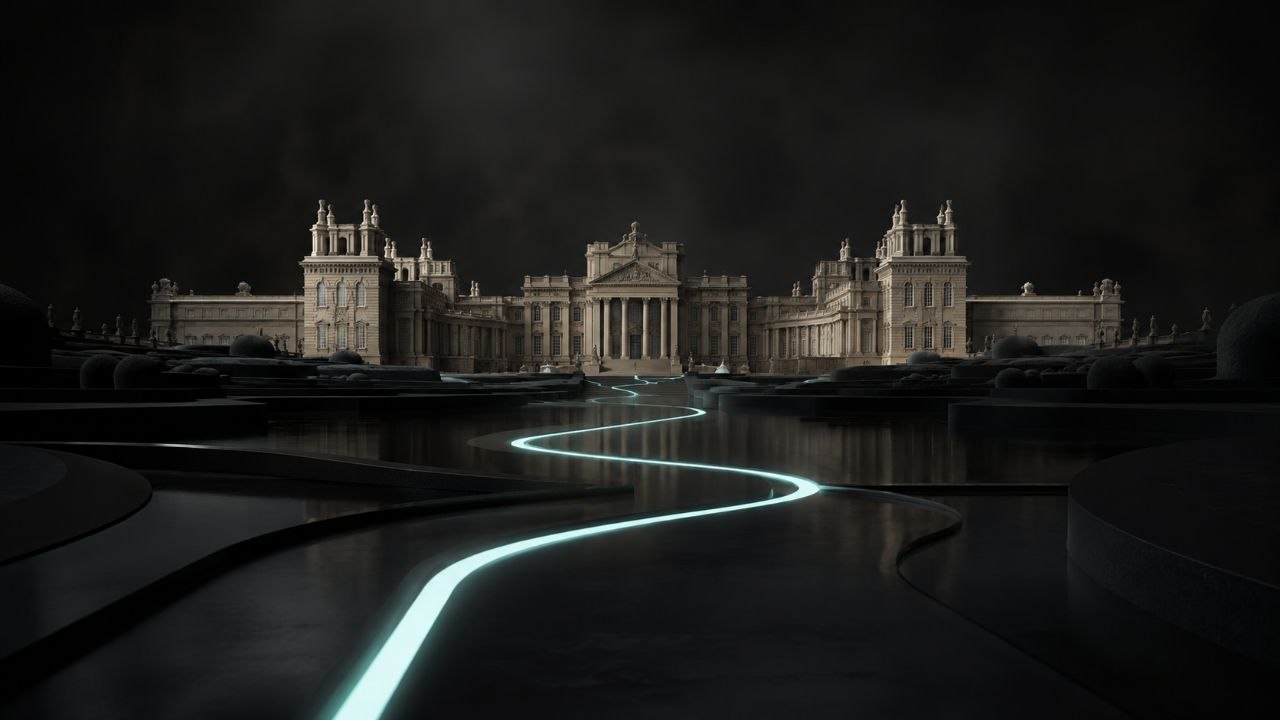
Blenheim Palace makes its first impression long before a visitor reaches the front door. The approach through the estate, the scale of the stonework, the framed views and the weight of its history all work together. That coherence has allowed the place to remain recognisable for more than three centuries while adapting to the needs of modern visitors.
A building designed as a message
Blenheim Palace was not built primarily as a home. It was built as a statement. The English nation presented it to John Churchill, first Duke of Marlborough, in 1705 as recognition of his victory over French and Bavarian forces at the Battle of Blenheim in 1704. The architecture was expected to communicate that victory to anyone who approached it.
This context shaped every design decision. The approach, the scale, the materials and the composition were all chosen to communicate power, permanence and national importance before a visitor had read a single word. The building was designed to be understood from a distance, through impression rather than explanation.
Scale creates identity
The palace was designed by John Vanbrugh, working with Nicholas Hawksmoor. Built between 1705 and 1722, it is an example of English Baroque architecture. The style is characterised by mass, symmetry, controlled rhythm and a deliberate use of scale to produce an impression of authority.
Stone, columns, arched windows and precise symmetry are not neutral design choices. They are signals. UNESCO World Heritage Site designation, awarded in 1987, recognises that the palace and its landscape together represent an outstanding example of an 18th century princely residence and an early example of the English Romantic movement. The designation recognises the importance of the palace and landscape as a complete historic composition.
The value for any organisation is straightforward: a strong visual character makes a place or a brand easier to recognise and easier to remember. Blenheim does not require explanation before it communicates. The architecture does the work on its own.
Landscape completes the composition
The palace is not experienced in isolation. Lancelot Capability Brown, who worked on the estate from 1761, modified the landscape to create two lakes and a naturalistic setting that became one of the most celebrated examples of English landscape design. The building and its surroundings were designed to be seen together.
This matters for branding because it demonstrates that identity is spatial. The arrival route, the view from the gate, the distance of the building from the road, the water and the open ground all contribute to the impression a visitor forms. The architecture inside the building is only part of what communicates. The same principle applies to a website, a shopfront or a vehicle wrap. The surrounding context shapes how the central identity is read.
History gives the place meaning
Architecture becomes more powerful when people understand why it exists. The Battle of Blenheim was a decisive engagement in the War of the Spanish Succession. The palace commemorates a specific event with a specific political meaning. That specificity is part of what makes the identity coherent.
Winston Churchill was born at Blenheim Palace, and the site remains closely connected to the wider Churchill family history. That connection to a figure of enduring historical significance gives the place an additional layer of meaning that extends beyond architecture and landscape. A business that can point to a clear reason for existing, and to the people and events that shaped it, has something that is difficult to copy.
A heritage brand must still feel alive
Blenheim Palace is over 300 years old. It survives commercially as a visitor destination, which means it must continually justify its relevance to people who could spend their time and money elsewhere. Conservation at this scale requires continuing investment. One major roof restoration project was costed at £12 million. Events, exhibitions and educational visits are actively managed throughout the year.
The visitor offer includes exhibitions, historical interpretation, retail, catering and a seasonal events programme. None of this is accidental. Each touchpoint is an opportunity to reinforce the identity, or to undermine it. The palace is at its strongest when every visible element feels consistent with the impression created by the architecture. It is at its weakest when modern additions feel disconnected from the core character.
Every visitor touchpoint matters
Wayfinding, signage, printed materials, maps, tickets and the retail offer are all part of the identity system. When they are well designed and consistent with the character of the place, they reinforce the central impression. When they are generic, cheap or inconsistent, they dilute it. A well designed sign in the right place is not decoration. It is part of the identity.
The same applies to digital touchpoints. The Blenheim Palace website carries the same visual language as the physical site. Navigation, imagery and tone of voice are coherent with the impression a visitor forms on arrival. Inconsistency between physical and digital environments is one of the most common ways that established identities are weakened.
Well considered print materials and signage reinforce the character of a place or business. Weak materials undermine it, regardless of how strong the central identity is. Every touchpoint that a customer encounters is an opportunity to confirm what the brand stands for, or to introduce doubt. This is a practical branding and design discipline, not a theoretical one.
What businesses can learn from Blenheim Palace
- A clear identity should be visible before the name is read. Scale, approach and composition communicate before any text does.
- Physical space can communicate position and confidence. Buildings, interiors and surroundings all shape what visitors expect from an organisation.
- History becomes useful when people can understand why it matters. Blenheim gains depth from the events and people connected to it.
- Every customer touchpoint should support the same impression. Signage, print, digital communication and staff behaviour should evolve without losing the central character.